The Robert Gaskin was a wooden sailing ship launched at Kingston, Ontario, on April 21, 1863. She was built for Kingston captain and shipowner Robert Gaskin. Records disagree on whether she had two or three masts and on whether the builder was Charles W. Jenkings or George Thurston. The most commonly cited size is 132.6 ft long, 26.3 ft wide and 11.3 ft deep, with room for 20,000 bushels of grain. Her registered tonnage was about 370 tons, rising to 393 tons by 1866.
For about two decades she carried grain and lumber on Lake Ontario and the St. Lawrence River. In 1876 she had major repairs, and in 1880 she was sold to an owner in Toledo, Ohio. In 1886 her masts and rigging were taken off and she became a salvage barge.
She sank while working near Brockville in the fall of 1889. She was helping raise the railway car ferry William Armstrong, which had sunk on the Brockville–Morristown crossing. On September 18, a lifting pontoon broke loose, shot to the surface and punched a hole in her hull. She sank quickly. Her crew got off safely onto a nearby tug, but the salvage equipment went down with her. In early November she was partly raised, but an air hose burst and she sank again while being towed toward shallow water. She was raised once more and towed to Brockville, then sank for the last time on November 23, 1889. After that she was abandoned. The Armstrong was eventually recovered.
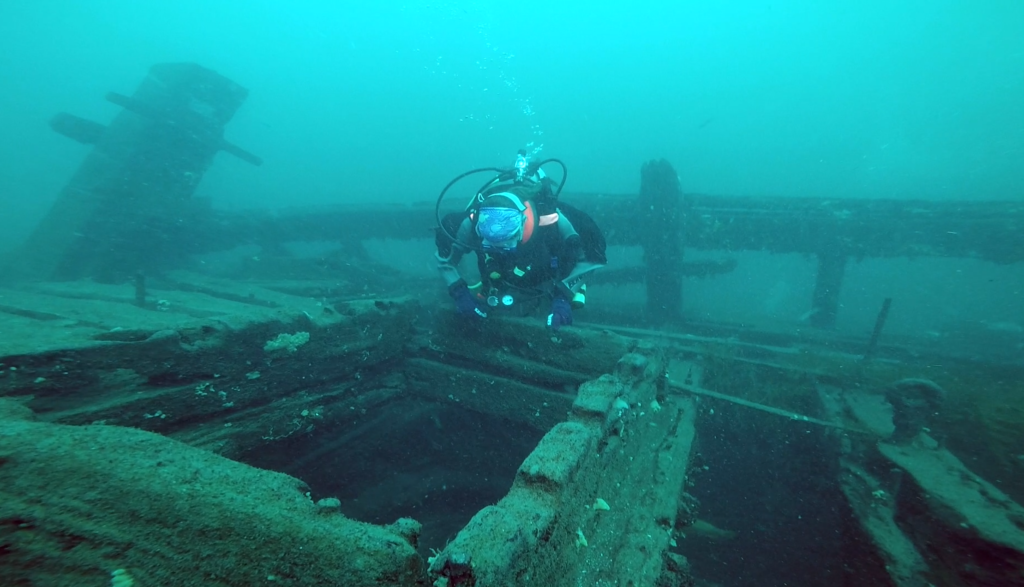
She went down close to shore in front of the salvage crews, so she was never lost and didn’t need to be “discovered.” She lies about half a mile downstream from Blockhouse Island and roughly 500 yards off Centeen Park, in 55 to 70 feet of water. She is one of the St. Lawrence’s most popular dive sites, marked with a buoy by Save Ontario Shipwrecks. In 2006 Brockville put up a heritage marker on shore telling her story.
Construction details
- Year built: 1863
- Built at: Kingston, Ontario
- Built by: Charles W. Jenkings
- Vessel type: Two masted wooden barque
- Rig: Iron rigged barque
- Official number: 57231
- Nation of registry: Canadian
Dimensions
- Length: 132.60 ft
- Beam: 26.30 ft
- Draft: 11.30 ft
- Gross tonnage: 370
Loss
In 1889 the Gaskin was the salvage barge working to raise the William Armstrong, a railway car ferry that had sunk on the Brockville–Morristown, NY crossing.
September 18, 1889 (first sinking). While extra pontoons were being sunk to lift the Armstrong, one pontoon rose suddenly and struck the Gaskin, badly damaging it. It sank quickly, and its crew jumped to the nearby tug McArthur. Nobody died. The salvage gear went down with her, including pumps and diving equipment, which was a heavy loss for Mr. Leslie, who ran the operation. Salvors first feared she had landed on the Armstrong, which would have blocked that salvage.
Early November 1889 (second sinking). A Brockville report dated November 9 said the Gaskin was lifted until its topmast cleared the water, but an air hose supplying the lifting pontoon from the compressor burst. Two tugs tried to tow it into shallow water, but it sank again before they got far. One dive source says she was towed about 600 feet before she went down.
November 23, 1889 (final sinking). A Kingston dispatch dated November 23 reported that the barge Gaskin had been raised and towed to Brockville. She did not stay up. The heritage marker says that while the Armstrong was eventually raised. The Gaskin stayed near shore and sank again on November 23, 1889. This time she was abandoned and her registration documents were surrendered. Some sources give the date as November 24, the day the newspaper report ran.
Location and depth
- GPS: 44.589297, -75.677086
- Depth: 55-70 ft
Diver notes
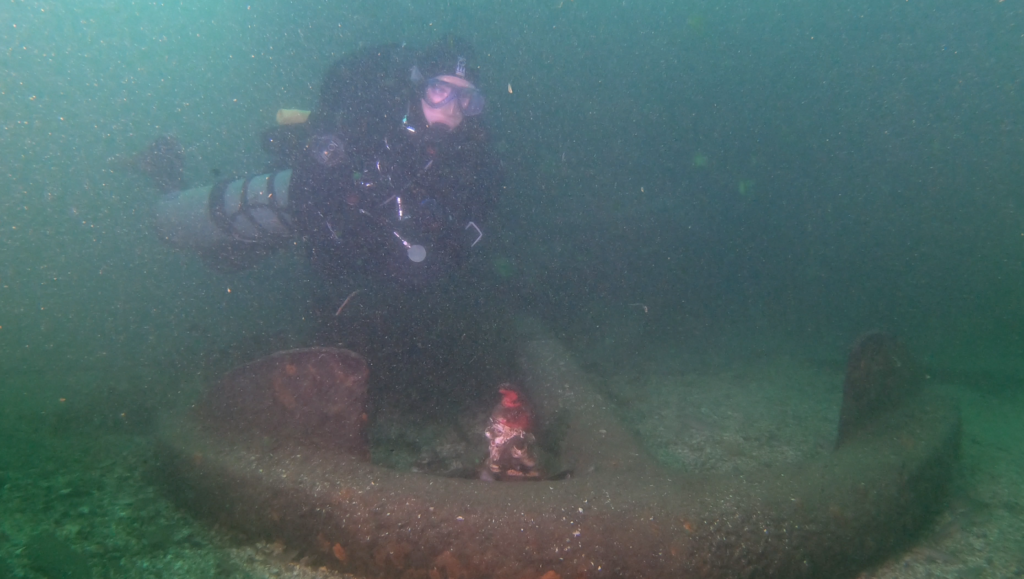
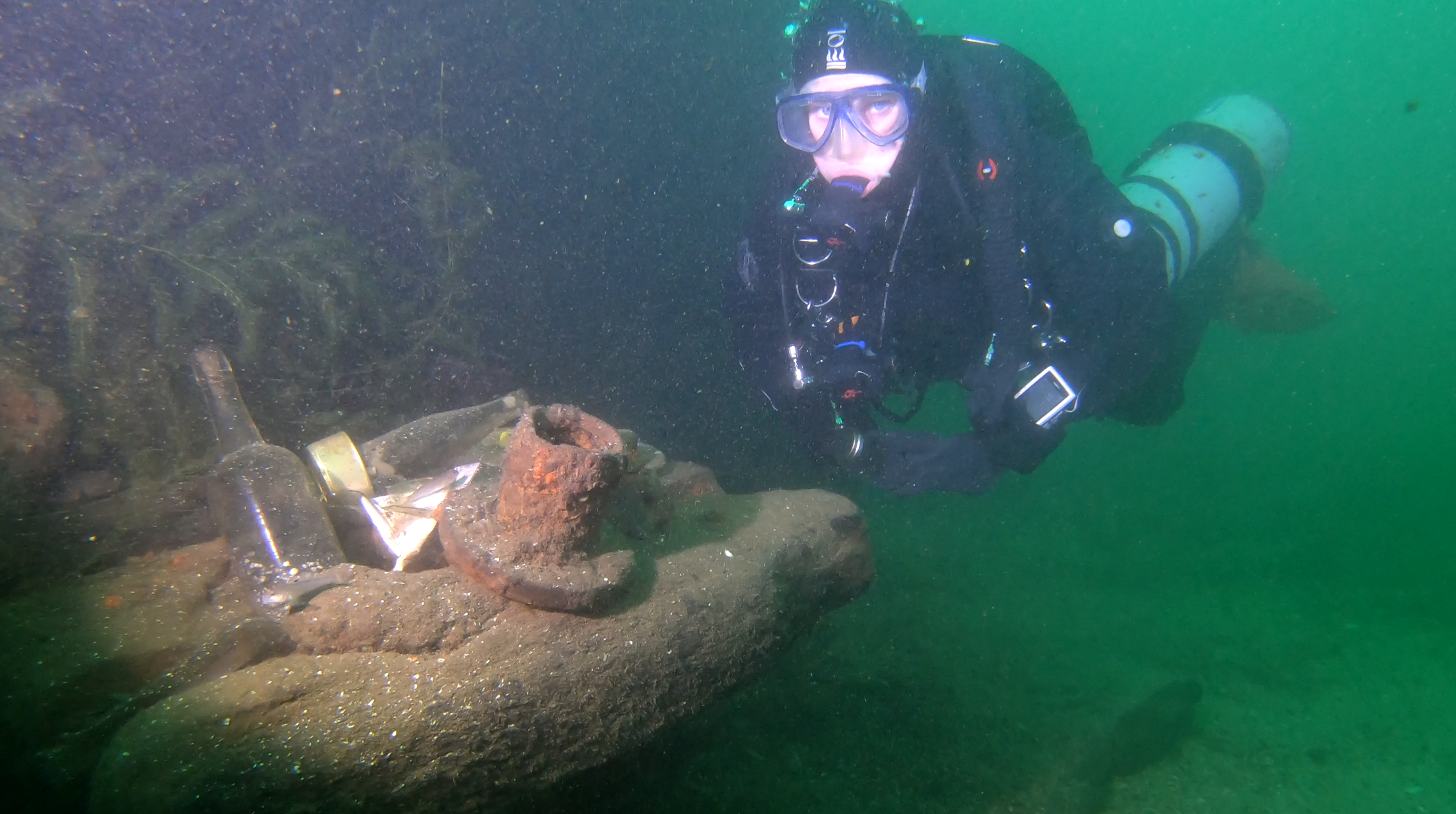
She lies a half mile downstream from the Brockville waterfront and river focal point, Blockhouse Island” and lies perpendicular to the current at a 55 ft. depth at the bow, and 70 ft. at the stern. That spot is about 500 yards off Centeen Park. A large anchor is located off the bow towards shore about 40 ft. from the Gaskin. Divers can still see the large holes in her hull from the pontoon strike. Most people reach her by boat, and she is considered an intermediate dive because of the river current and boat traffic.