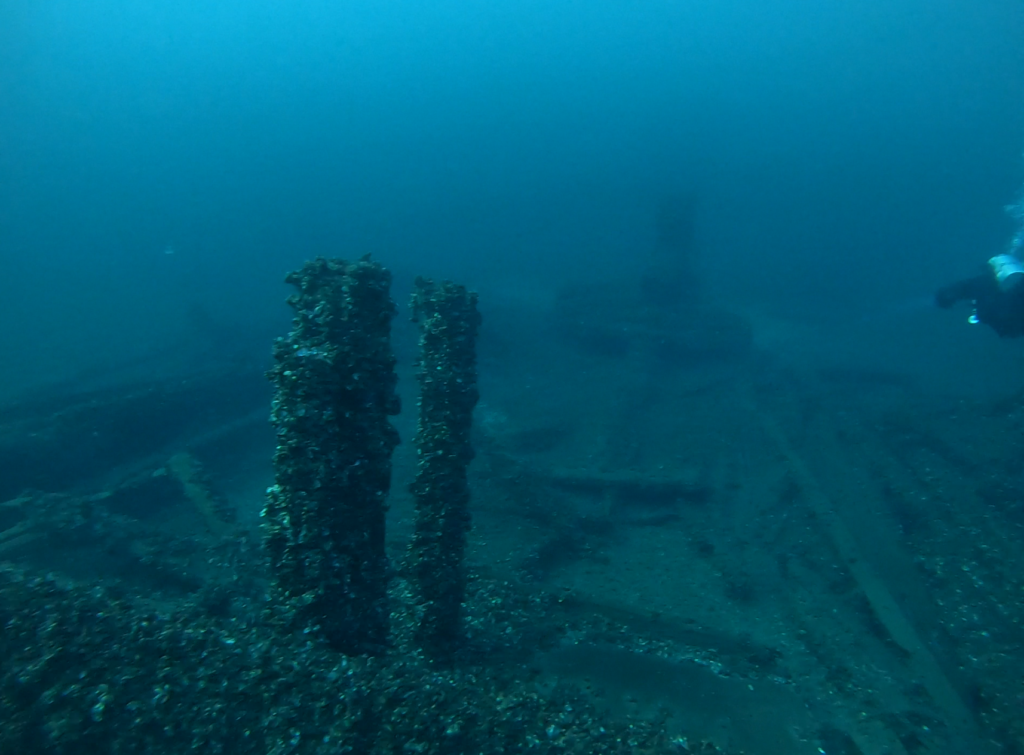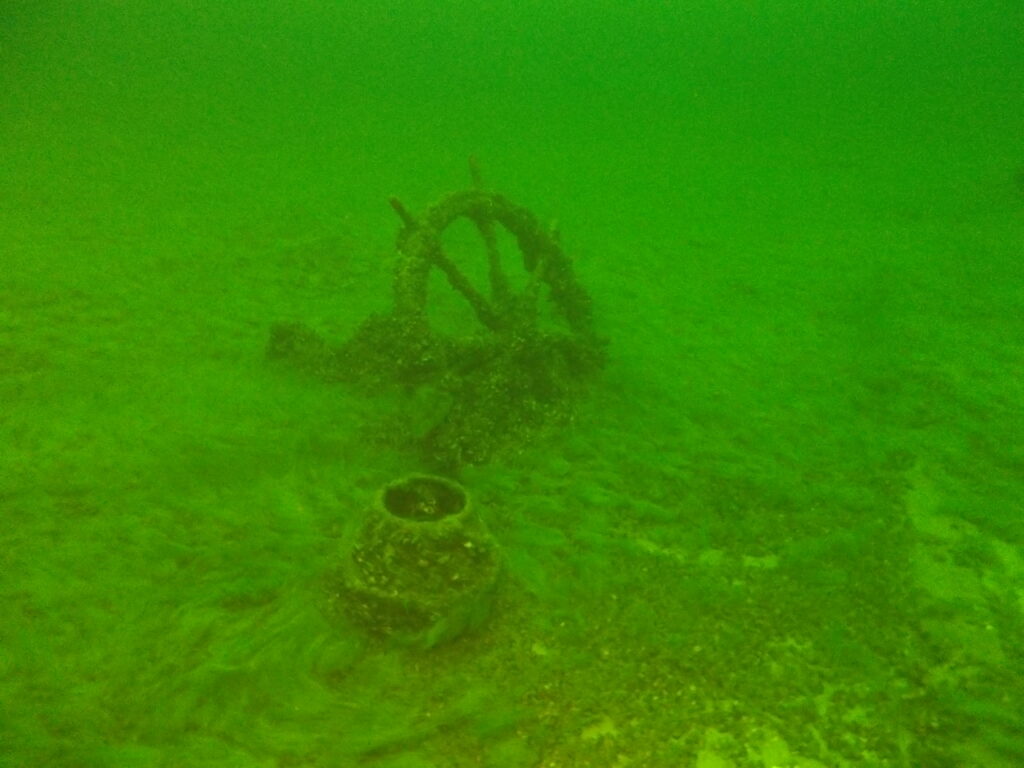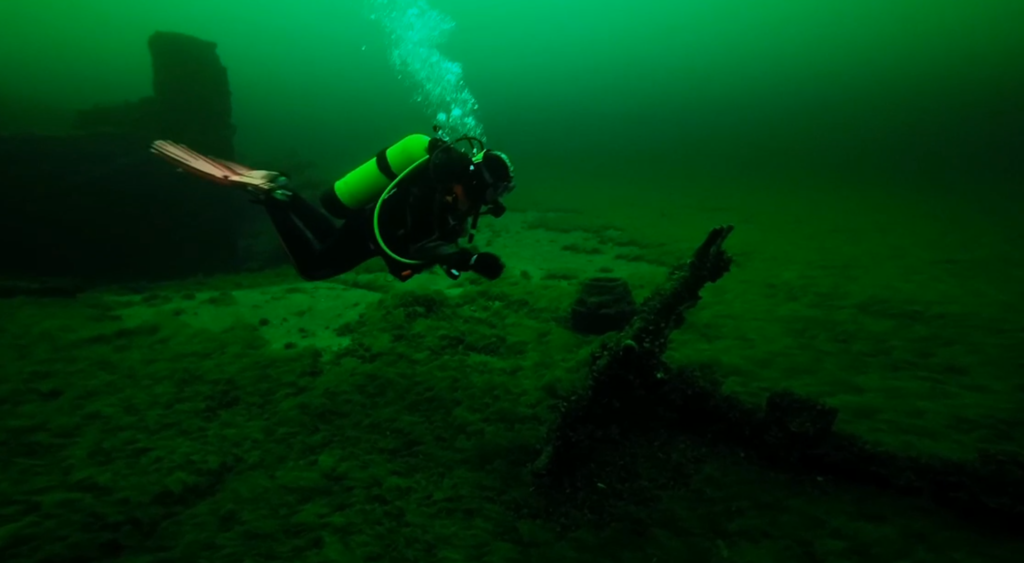
About two kilometres off the mouth of the Humber River, in roughly 20 metres of water, lies the wooden hull of the Sligo, one of the oldest wrecks in Toronto’s waters. Before she was a stone barge she was the Prince of Wales, a St. Catharines-built barquentine that crossed the Atlantic with some of the earliest Canadian oil exported to Britain. Her 58-year career spanned every Great Lake and two names.
The vessel was launched at St. Catharines in 1860 by Louis Shickluna, the Maltese-born shipbuilder whose yard on the Welland Canal turned out many of the finest Canadian lake vessels of the era. She was built for Capt. John Campbell Graham, who was both her owner and master, at a cost of around $20,000.
Like several ships launched that year she was named Prince of Wales, for the 18-year-old Prince Albert Edward (later King Edward VII), whose 1860 tour of British North America was the great event of the season. Maritime historian C.H.J. Snider recorded the tradition that the Prince himself came aboard while she was loading grain at Chicago for Collingwood.
She was rigged as a barquentine (square sails on the foremast, fore-and-aft sails on the main and mizzen), with a black hull. She measured 137 ft long, 23 ft in beam and 11.8 ft deep in the hold, and was rated at 400 tons under the old measurement rules.
In 1874 Graham had her rebuilt at St. Catharines and renamed Sligo, after the town in northwest Ireland. The name suited the Irish families (the Norrises, Neelons and Conlons) prominent along the Welland Canal; a popular song of the day also sang of “Sligo port below.”
Because the rebuild was so extensive, the Dominion register recorded the Sligo as a new three-masted schooner “built 1874” under official number 72711, and the Prince of Wales was listed as broken up. This is why some records give her build year as 1874. As rebuilt she measured about 138 ft on deck by 23 ft by 11 ft 8 in, and 335 tons register. Later registers list her at 284 tons.
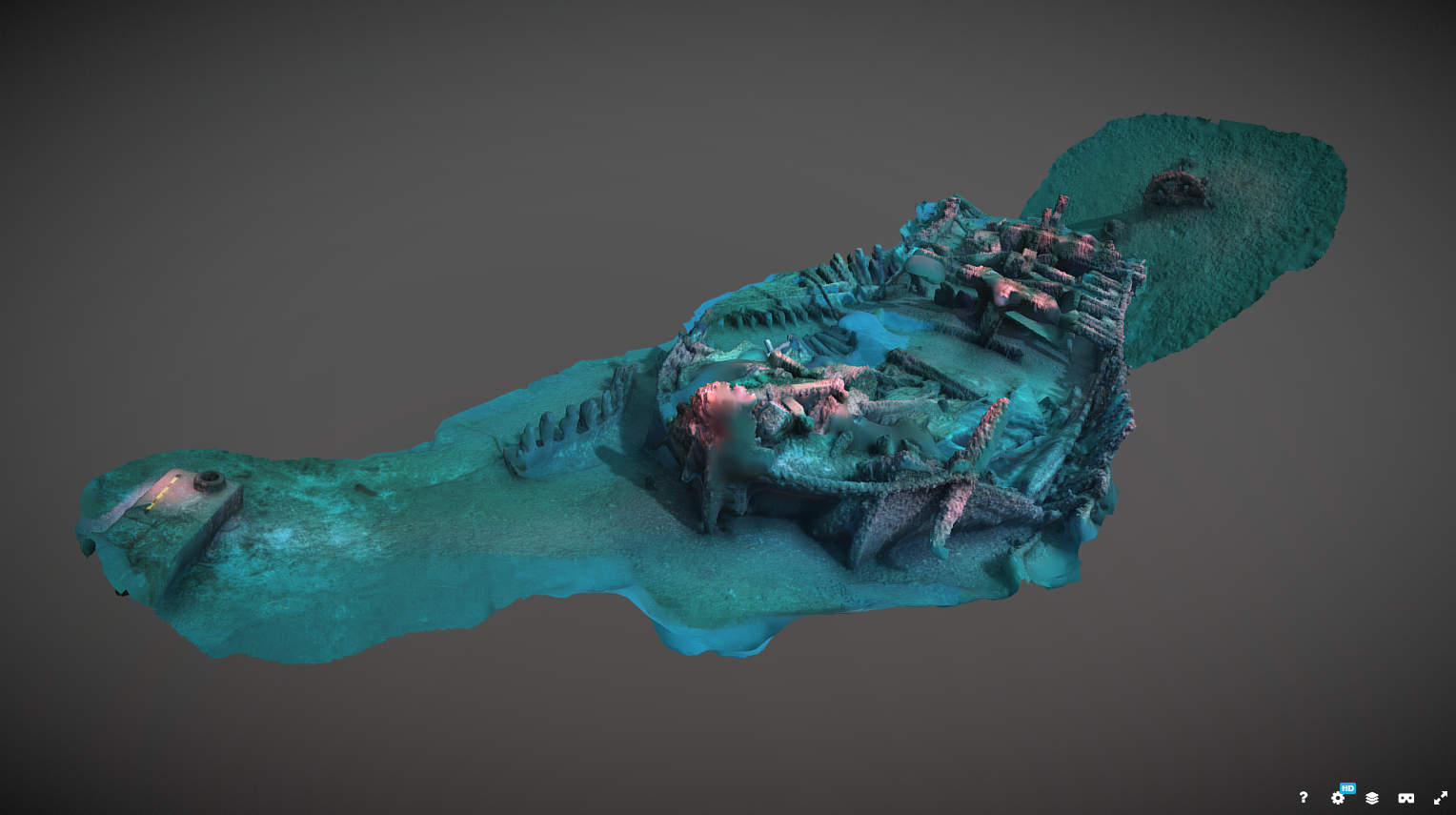
3D Photogrammetry Model
Construction details
- Year built: 1860
- Built at: St. Catharines, Ontario
- Built by: Louis Shickluna
- Vessel type: Three-masted barquentine
- Rig: Three-masted barquentine (square-rigged foremast)
- Official number: 72711
- Nation of registry: Canadian
Dimensions
- Length: 137.00 ft
- Beam: 23.00 ft
- Draft: 11.80 ft
- Gross tonnage: 400
Loss
On the morning of 5 September 1918 the Sligo was under tow, loaded with crushed limestone, when a thunderstorm swept across western Lake Ontario. She began taking on water, and the weight of the water and stone parted (or forced the crew to cut) the tow line. Separated from her tug, she made it into Humber Bay and sank less than a mile from shore, about two kilometres south of the Humber River mouth. Her crew reached shore in the ship’s boat, and no lives were lost.
Accounts differ on details. Save Ontario Shipwrecks describes her as bound for Hamilton with about 500 tons of limestone. A Spacing magazine account says the cargo was about 90 tonnes and was intended for the road that became the Queen Elizabeth Way. Neither the hull nor the stone was thought worth salvaging, and she was left where she sank. She was 58 years old.
Location and depth
- GPS: 43.615003, -79.451469
- Depth: 65 ft
Diver notes
The wreck was located by Toronto scuba diver Don McIntyre in 1984. In 2000, Kimberly Monk, then a marine archaeology student and president of the Toronto chapter of Save Ontario Shipwrecks (SOS), led detailed research on the site, including a bird’s-eye photomosaic of the hull assembled from 165 photographs.
The Sligo rests upright in about 20 m (65–67 ft) of water on a mud bottom, with her final cargo of stone still in the hull. Invasive zebra and quagga mussels now coat nearly every surface. The site is marked by a privately maintained mooring buoy (replaced by a winter marker in the off-season, per Canadian Coast Guard notices to mariners). The wreck of the schooner Julia B. Merrill lies about 120 yards to the west, and the Lyman M. Davis is nearby as well. Together they make Humber Bay one of Toronto’s most popular training dive areas. Local dive shops run summer charters; an open-water certification is required.