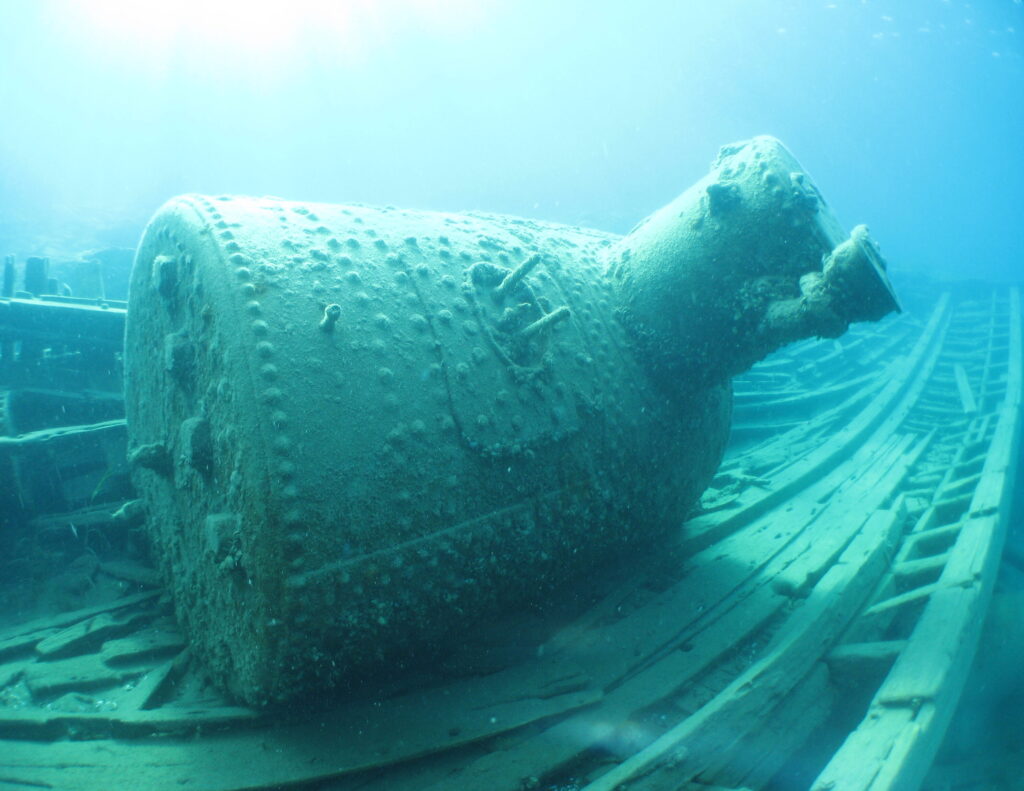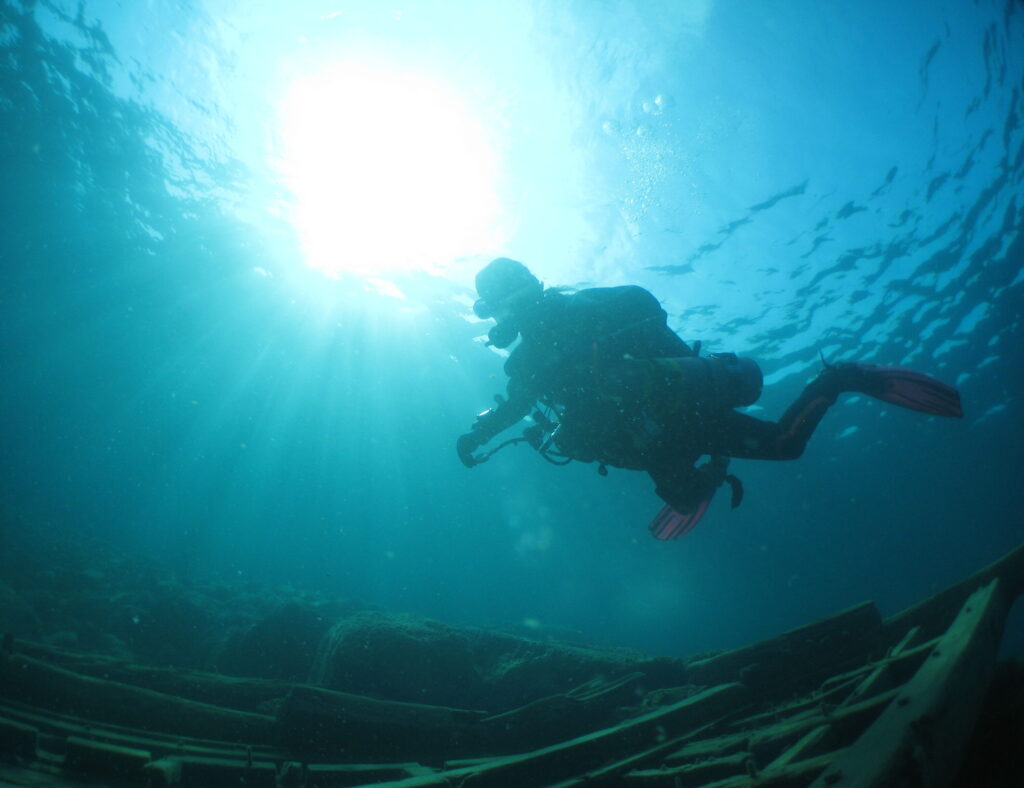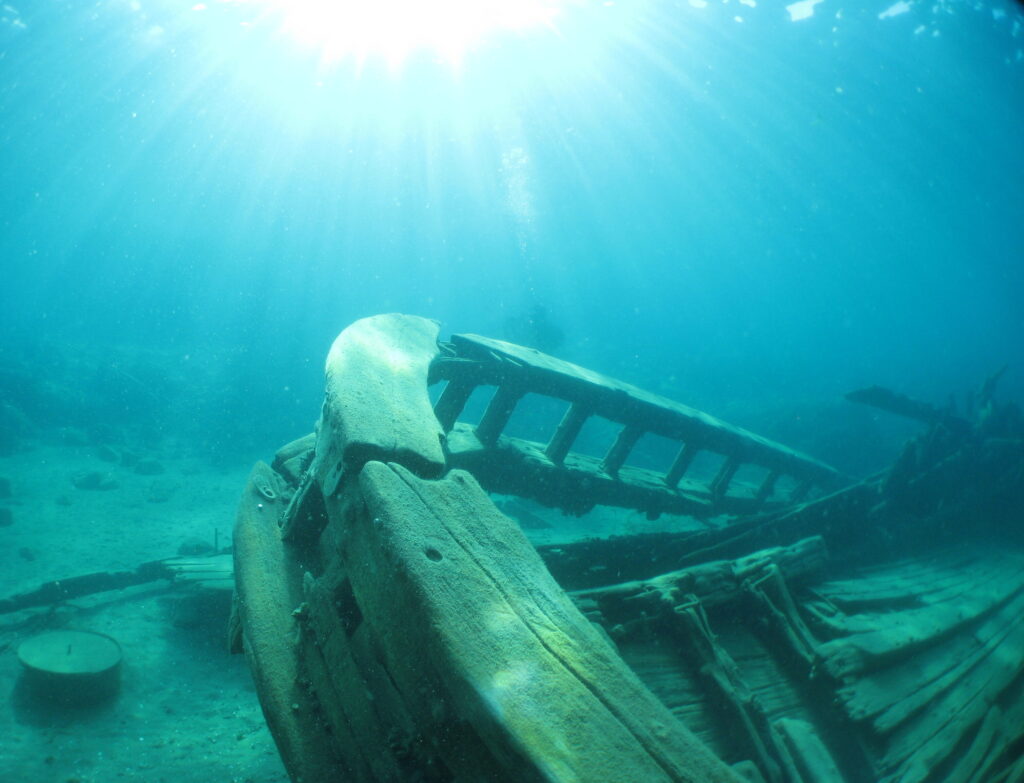
The Alice G was a wooden, screw-propelled steam tug built at Collingwood, Ontario, in 1902 for a Tobermory owner. She was lost in November 1927 when a gale tore her from her moorings and drove her aground in Little Tub Harbour. Nearly a century later she lies in about 6–8 m (20–25 ft) of water, roughly 15 m (50 ft) from shore, within Fathom Five National Marine Park.
She is the best-preserved of four tug wrecks at the dive site known simply as “The Tugs”. Because she sank in a storm rather than by fire, as the other three did, her hull, boiler, engine and propeller survive. That makes her one of the most visited shipwrecks in Tobermory.
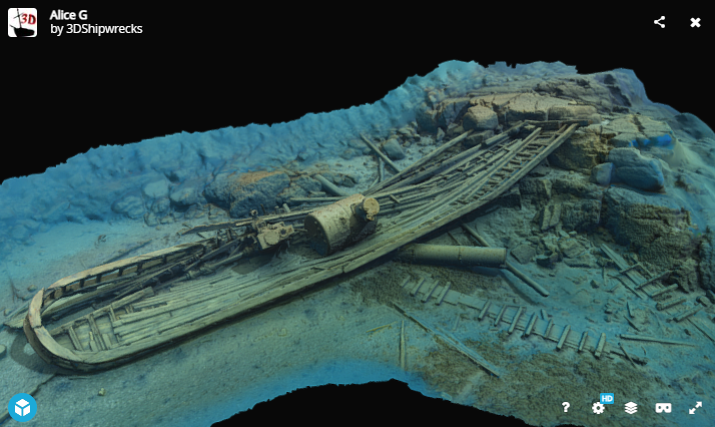
3D Photogrammetry Model
Construction details
- Year built: 1902
- Built at: Collingwood, Ontario
- Built by: G. W. Golden of Tobermory
- Vessel type: Wooden Steam Powered Tug
- Rig: N/A
- Official number: 107169
- Nation of registry: Canadian
Dimensions
- Length: 67.00 ft
- Beam: 12.00 ft
- Draft: 06.00 ft
- Gross tonnage: 36
Loss
The Alice G was lost in November 1927, during a severe late-season gale. She was tied up in Little Tub Harbour, Tobermory’s inner harbour, when the storm snapped her mooring lines. The wind drove her aground near the harbour’s shore, where she sank in shallow water.
No deaths are recorded, and no exact day in November appears in the sources consulted. She was not raised. Unlike the other tugs that ended up nearby, she did not burn, which is why so much of her survives.
Location and depth
- GPS: 45.258044, -81.660936
- Depth: 25 ft
Diver notes
Discovery and the wreck today
The Alice G was never truly lost, so there is no recorded discovery date. She sank in plain sight in a busy harbour, and her position has been known locally since 1927. Recreational divers have explored her for decades; a photograph of divers beside her boiler, taken around 1994 by researcher Arthur Amos, is held by the Bruce County Museum.
The wreck now lies within Fathom Five National Marine Park at 45° 15.588′ N, 81° 39.712′ W. She rests nearly upright with a slight lean to starboard in about 6–8 m (20–25 ft) of water.
- What survives: hull, deck, boiler and smokestack, steam engine, propeller, anchor and a curved railing along the fantail.
- Access: shore entry from the diver platform and steps at the Tugs site; a mooring buoy marks the wreck for boats.
- Who dives it: beginners, snorkellers and freedivers; it is a common open-water training site.
- Neighbours: the burned remains of three other tugs, including the Robert K and the John & Alex, lie scattered nearby.
- Rules: removing, damaging or disturbing anything on the wreck is prohibited under park regulations, and divers must register with Parks Canada.