The Mapledawn was a steel bulk freighter built in Cleveland, Ohio, in 1890 as the Manola. It was wrecked on the west side of Christian Island in Georgian Bay on November 30, 1924. Her 34-year career included the Lake Superior iron ore trade and a wartime attempt to send her to salt water. In 1918 she was cut in two to pass the St. Lawrence canals, and her bow sank in Lake Ontario with the loss of 12 lives. Canada Steamship Lines rebuilt the surviving stern half and renamed her Mapledawn. She ran aground in a November snowstorm with a cargo of barley, and her whole crew survived. The wreck was never lost: it lies in shallow water close to shore and is now one of Georgian Bay’s best-known shore dives.
Construction details
- Year built: 1890 (Manola) and 1920 (Mapledawn)
- Built at: Cleveland, Ohio
- Built by: Globe Iron Works / Globe Ship Building Co.
- Vessel type: Steel, three-masted, propeller-driven bulk freighter
- Rig: N/A
- Official number: 92170 (Manola) / 141836 (Mapledawn)
- Nation of registry: United States / Canadian
Dimensions
- Length: 249.70 ft later in 1923 lengthened to 349.00 ft
- Beam: 40.20 ft
- Draft: 21.30 ft
- Gross tonnage: 2,404 in 1923 increased to 3,100
Loss
The Mapledawn was lost on November 30, 1924, near the end of the shipping season. She was downbound from Fort William, Ontario, with a cargo of barley for Midland. Some accounts give her destination as nearby Port McNicoll.
A blinding snowstorm and gale cut visibility in southern Georgian Bay, and the ship strayed into the shoals off the west side of Christian Island. Diver accounts say she struck a submerged rock that snapped off her propeller and part of the shaft. The engine room flooded almost at once. With no power or steering, she was driven onto Quai des Roches and grounded hard about 100 yards from shore.
All hands survived. Two crewmen reached shore and crossed the island to the Beausoleil First Nation community for help. One dive account adds that one of the two later went back to the wreck for personal belongings and drowned; that detail is not in the registry sources.
Location and depth
- GPS: 44.867469, -80.243819
- Depth: 10-35 ft
Diver notes
The remains lie scattered off Christian Island’s west shore in about 10 to 35 ft of water. The bow points toward land and the stern faces out into the bay. Shallow shoals make boat approaches tricky. The island is part of the Beausoleil First Nation reserve.
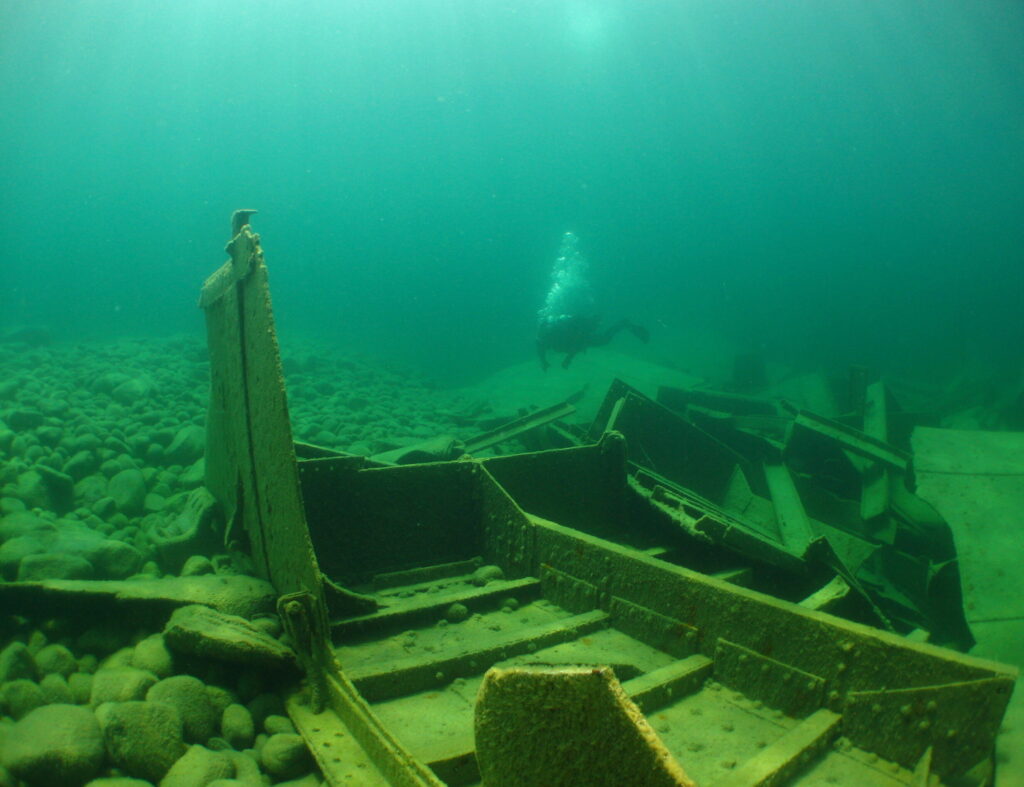
- Bow: Close to shore and overturned, with a large jagged crack. Ice has pushed it down to about 10 ft below the surface, and the forward mast lies flat on the bottom.
- Midsection: A wide field of flattened and torn deck plating, some of it inch-thick steel, with small passages to swim through.
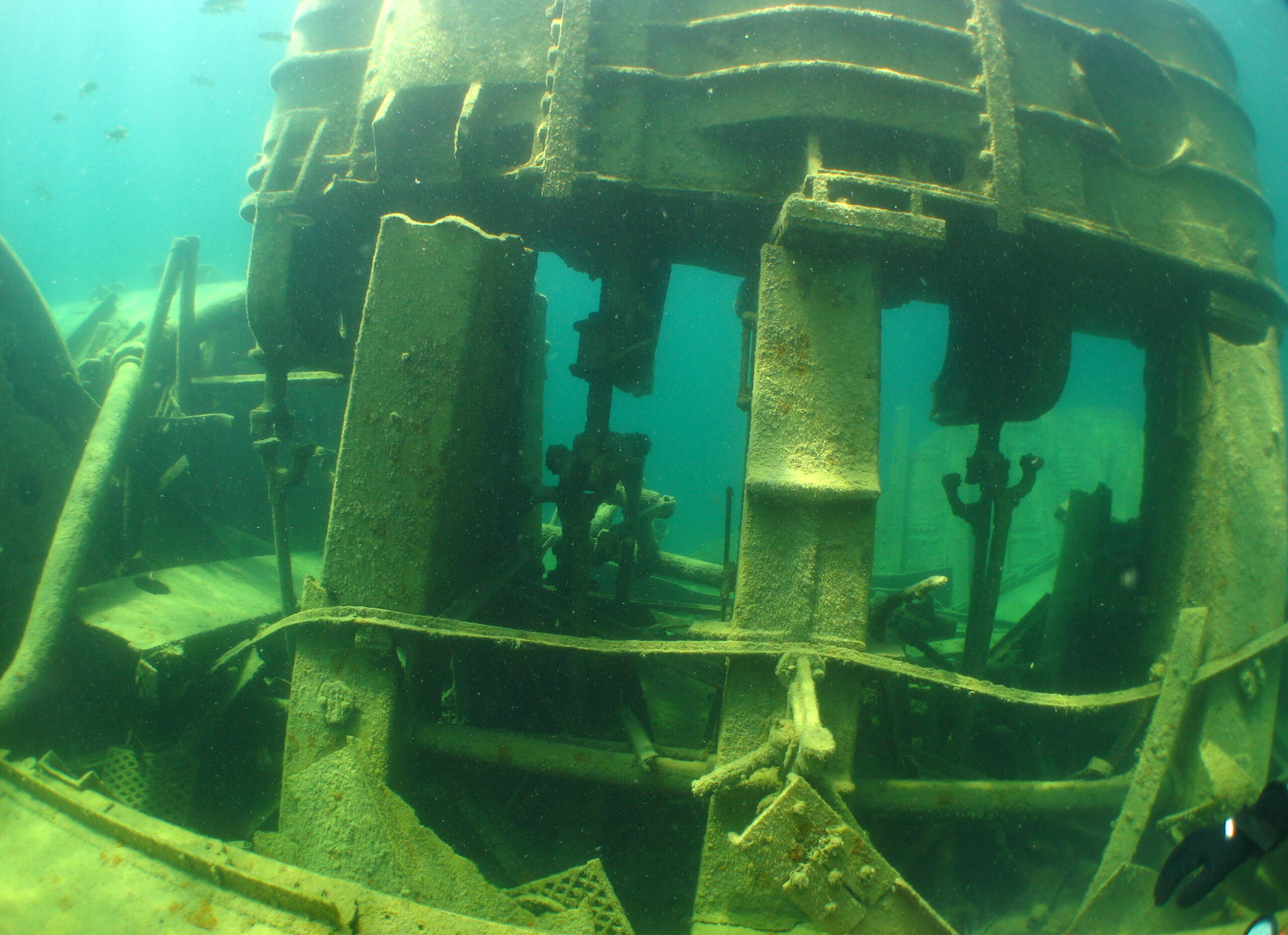
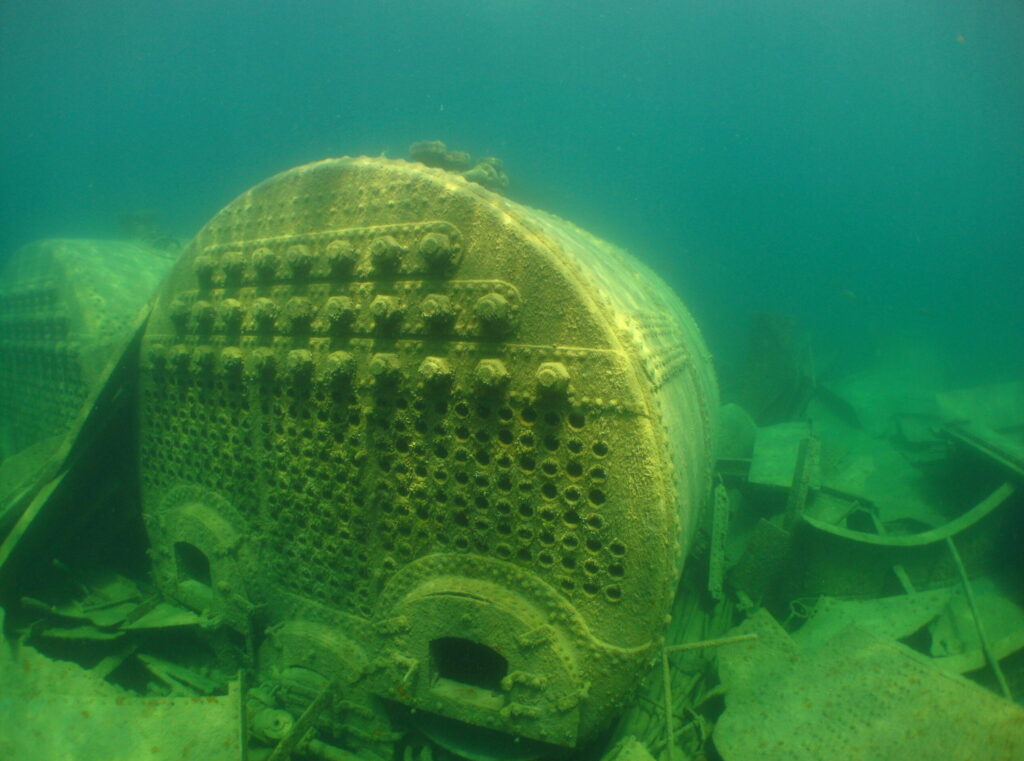
- Boilers and engine: Two Scotch boilers, about 10 x 14 ft, stand upright with coal still in the bunkers. Behind them the triple-expansion engine rises to within a few feet of the surface.
- Stern and propeller: The stern section is fairly intact but detached. The propeller section lies about 150 ft to the northwest in about 35 ft of water. The rudder has never been located.
Divers note one curiosity: the Mapledawn’s stern is in Georgian Bay while her original bow lies in Lake Ontario, making her a wreck in two Great Lakes.