The Conestoga was a 258-foot wooden steam freighter that burned and sank in the St. Lawrence River near Cardinal, Ontario, on May 21, 1922, after 44 years in service. Thomas Quayle & Sons built her in Cleveland in 1878 for the Anchor Line, the Great Lakes freight fleet of the Pennsylvania Railroad.
She spent her first four decades carrying package freight and grain on the American side of the lakes, first for the Anchor Line and from 1906 for the Crosby Transportation Company of Milwaukee. Around 1919 she was sold into Canadian service and run by Canada Steamship Lines between the upper lakes and Montreal.
On her last trip she was carrying wheat from Port Colborne to Montreal. Fire broke out while she was in Lock 27 of the Galop Canal. Her 22 crew got her clear of the lock, and she drifted ashore and burned to the waterline. No one died, and the cause of the fire was never found.
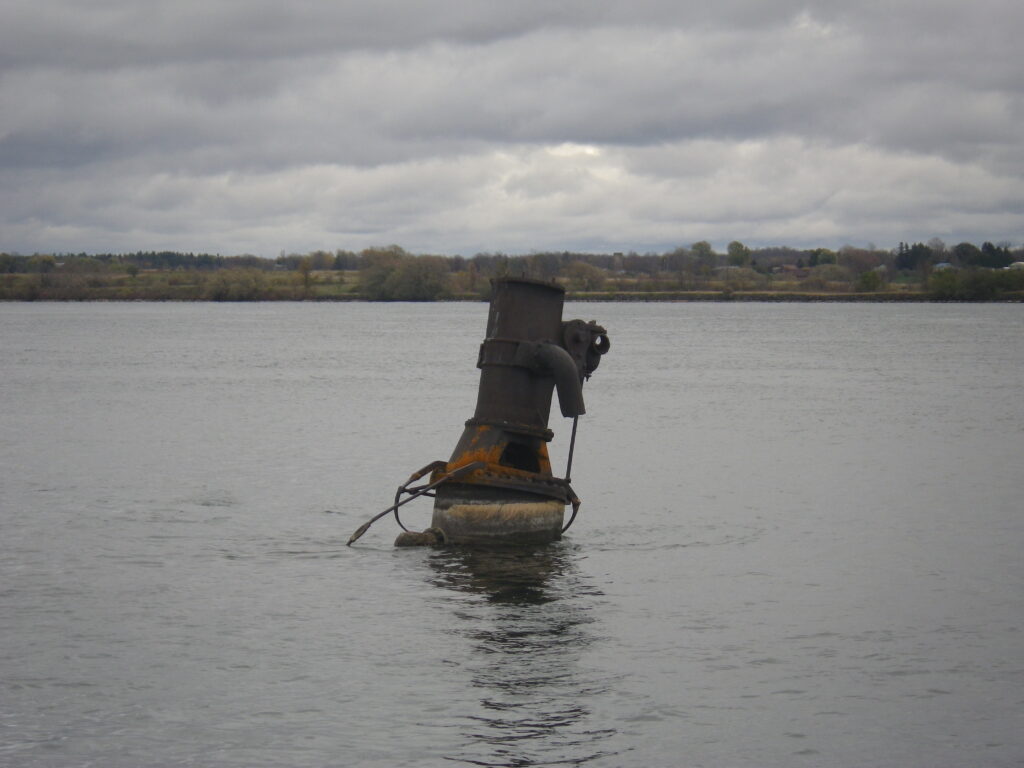
The wreck was never lost: the top of her steeple compound engine still rises above the water. She lies in about 25 feet of water close to shore and is one of the best-known shore dives on the upper St. Lawrence.
Construction details
- Year built: 1878
- Built at: Cleveland, Ohio
- Built by: Thomas Quayle & Sons
- Vessel type: Wooden-hulled, iron-strapped package freighter
- Rig: N/A
- Official number: 125669 / 140998
- Nation of registry: United States / Canadian
Dimensions
- Length: 258.60 ft
- Beam: 36.00 ft
- Draft: 16.20 ft
- Gross tonnage: 2,008
Loss
In May 1922 the Conestoga was downbound from Port Colborne, Ontario, to Montreal with a cargo of wheat, often given as about 30,000 bushels. Before the St. Lawrence Seaway was built, ships bypassed the river’s rapids through a chain of small canals. On the afternoon of May 21, 1922, while the Conestoga was in the lift lock of the Galop Canal (Lock 27, part of the Williamsburg Canals) just west of Cardinal, Ontario, fire broke out on board, reportedly in or near the engine room.
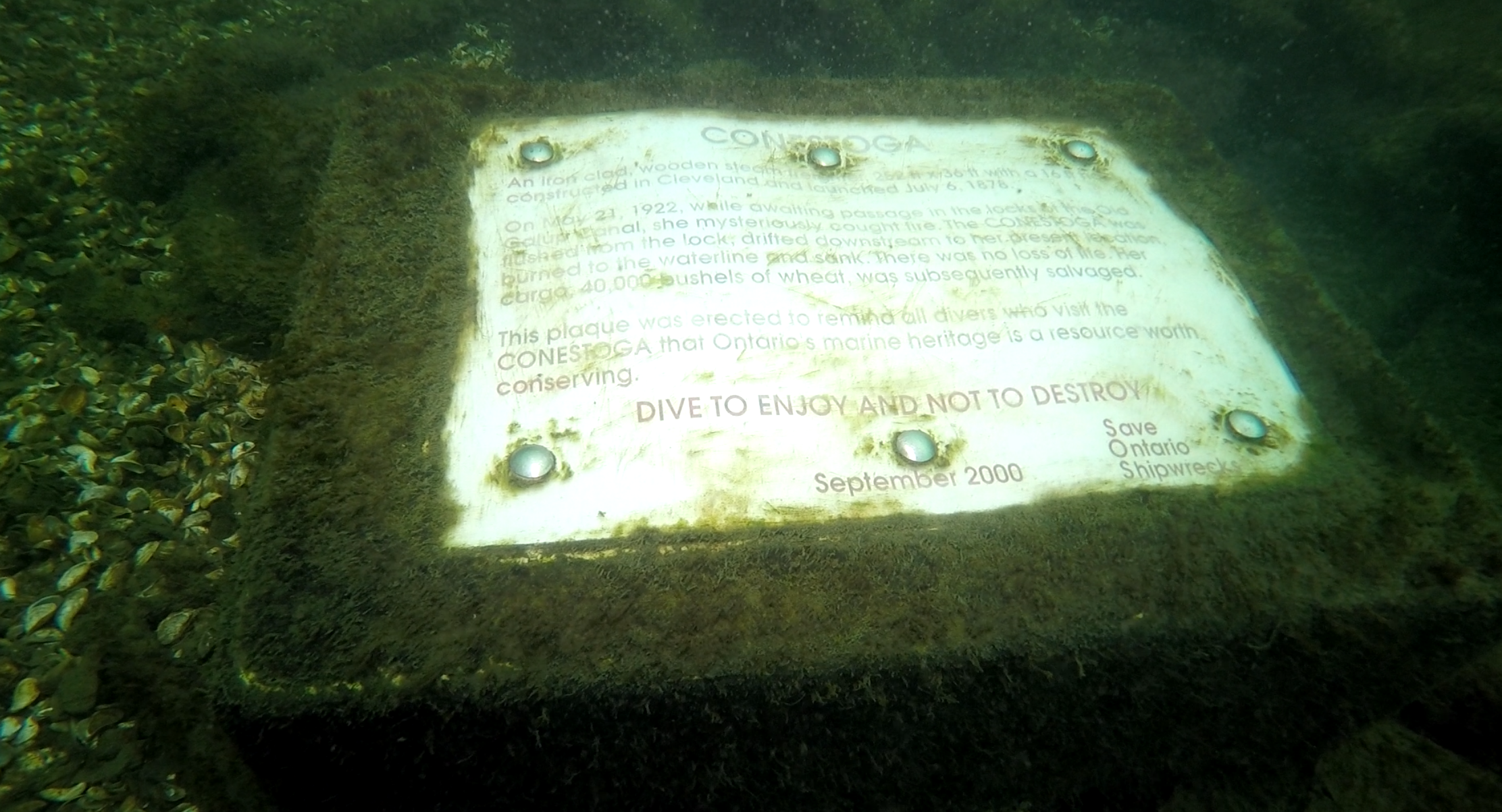
Her crew of 22 stayed at their posts and got the burning ship out of the lock so that she would not destroy it. Several of them were badly burned in the effort, but no one was killed. Once clear of the lock, the Conestoga drifted downstream and grounded on the north (Canadian) shore, where she burned to the waterline and settled in shallow water. The Toronto Globe put the loss at about $250,000 (a later historical marker gives $200,000). Within two days she had been abandoned to her underwriters as a total loss. According to the Save Ontario Shipwrecks marker, the wheat cargo was salvaged.
The cause of the fire was never determined, and there has long been speculation that it was set deliberately.
Location and depth
- GPS: 44.779167, -75.393000
- Depth: 22-30 ft
Diver notes
The Conestoga lies alongside the south wall of the old Galop Canal, a short distance upstream (west) of Cardinal and a few miles east of the Ogdensburg–Prescott bridge. The wreck is in about 22–30 ft (7–9 m) of water, roughly 75–80 ft (23–25 m) from shore, and is reached from shore by a gravel causeway road with parking nearby.
- What’s visible: the upper part of the steeple compound engine, along with parts of the boiler, rises above the water and marks the site.
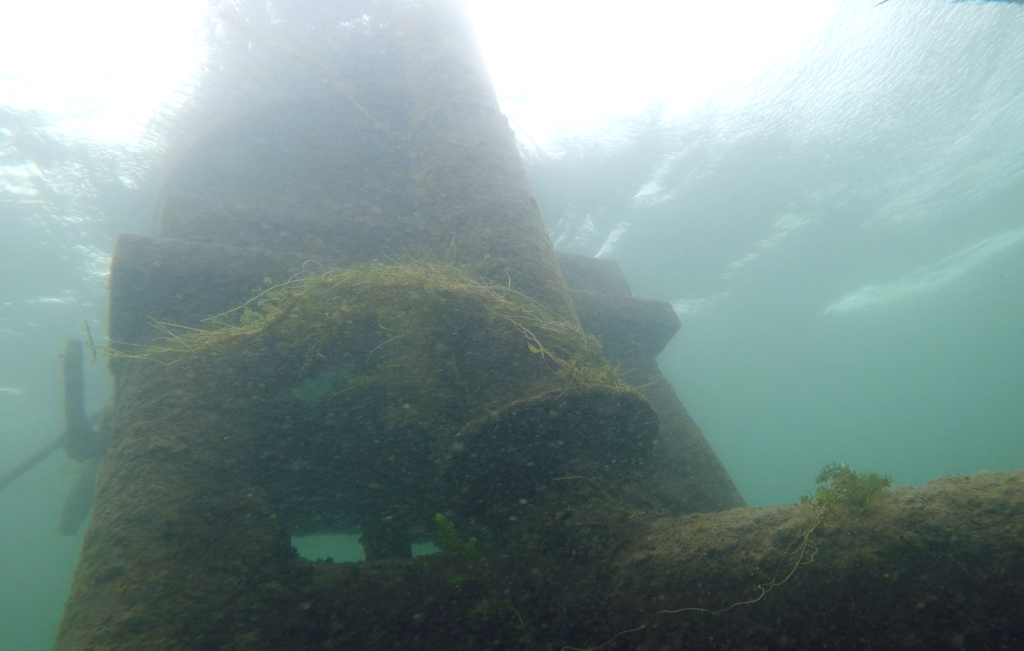
- Under water: the lower wooden hull survives, in places in fairly good condition, together with machinery and scattered debris.
- Condition: the upper structure has been badly damaged by river ice, the ironwork is rusting away, and the wreck has suffered from souvenir-taking by divers over the years.
- Diving: the shallow depth, easy shore access and often good visibility (sometimes 30 ft or more) make it a popular novice dive and a frequent training site. Current and boat traffic in the river still call for care, and divers are asked to look but not take.